

State clubs
0
One dot per state club

About the club
One national club for everyone who cares about space, with state clubs across India and chapters abroad.

A note from our Founder
Every launch begins with someone looking up. India's space story is no longer only about rockets. It is about the child who looks at the stars tonight and the young founder who builds a satellite company tomorrow. We started this club so that no young Indian misses out on space because of where they live or what they can pay.
Why we started
Today India's space community is scattered across more than a hundred small groups: school programmes, astronomy societies, student chapters and industry bodies. None speaks for all of it. None of them can show a student the way from a classroom to a first job in space.
Space Club of India brings them together. It gives leaders one place to meet, connects people across the space sector, and helps young Indians find their way in.
The Awards Night and policy roundtables put the whole sector together.
State clubs and chapters abroad connect members to scientists, founders and agencies.
Scholarships, the Olympiad, school clubs and mentors help young people get started.
Meet the club
Our introduction film, released for National Space Day: why India's space future must belong to everyone.
Play the film1:44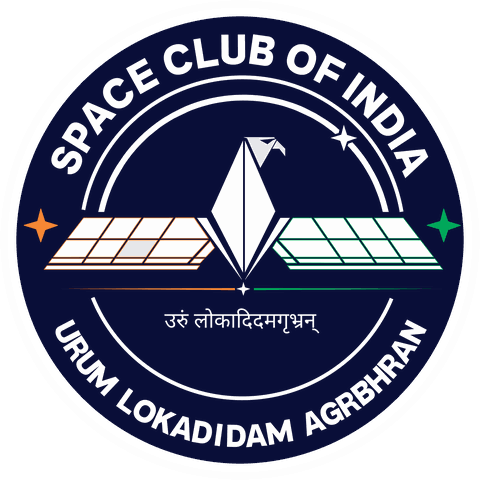
How it started
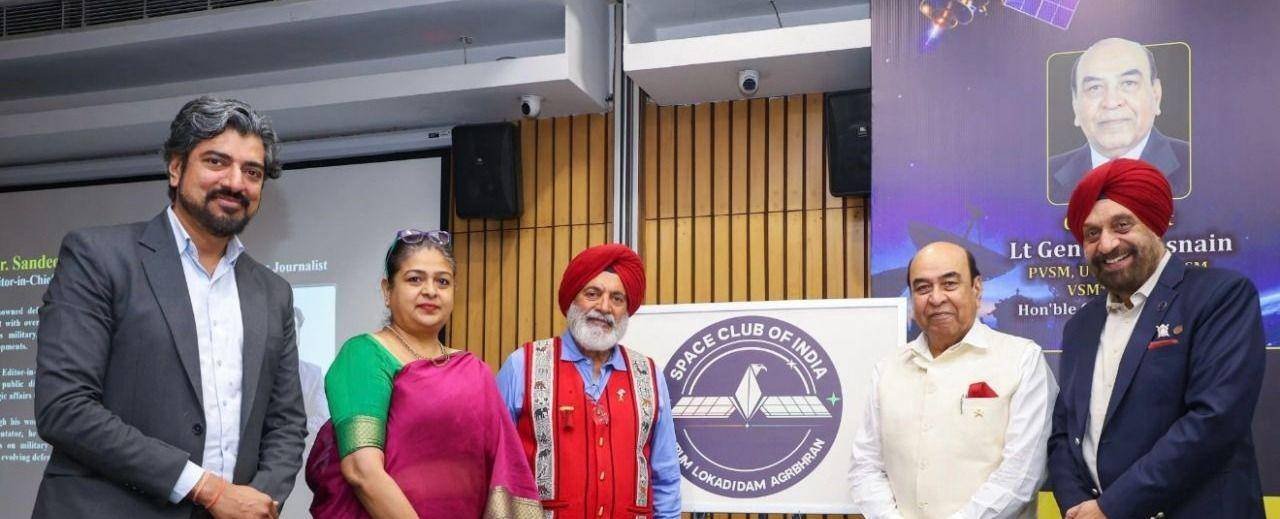
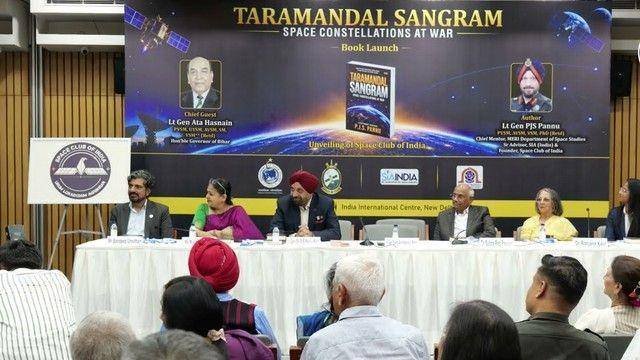
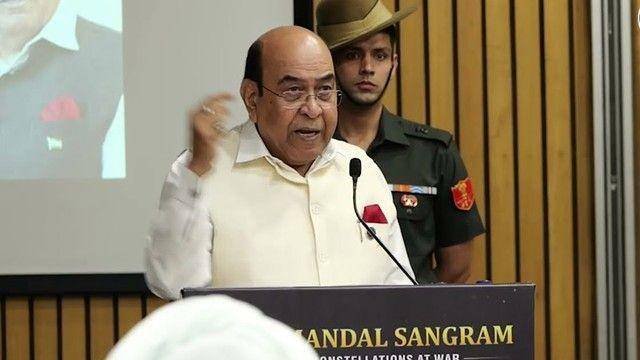
Space Club of India was unveiled at the launch of Taramandal Sangram: Space Constellations at War, at the India International Centre, New Delhi. Lt Gen Syed Ata Hasnain (Retd.), Governor of Bihar, was Chief Guest. He and Gen J. J. Singh unveiled our logo.

The book that launched the club
Space Constellations at War
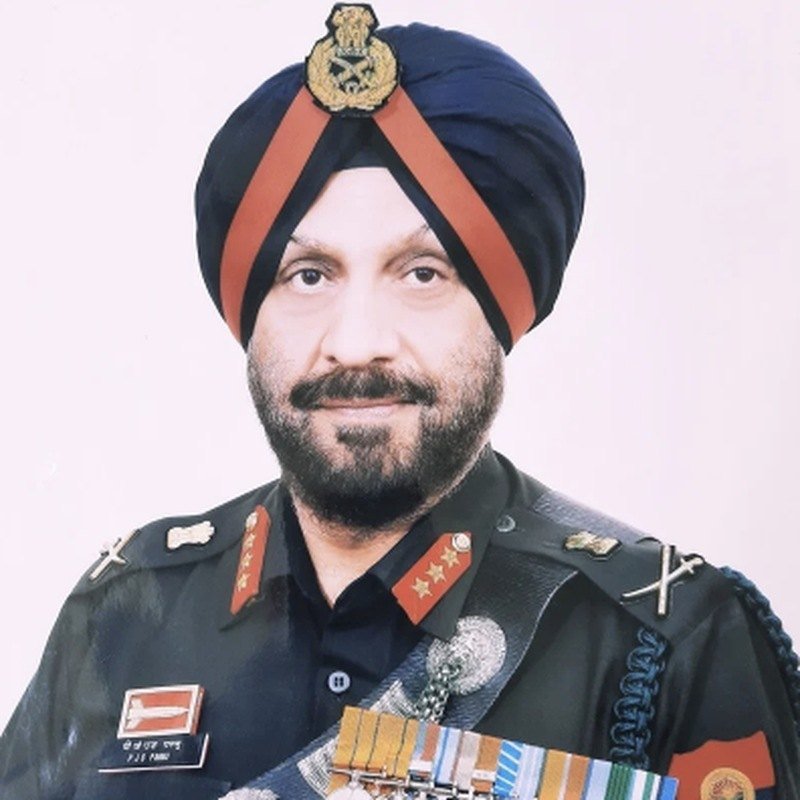
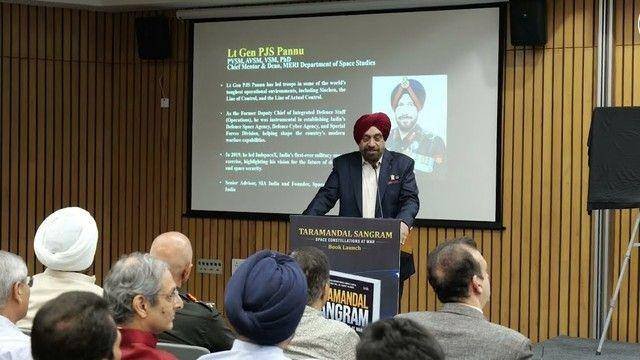
Lt Gen PJS Pannu, PVSM, AVSM, VSM (Retd.)
The founder's book on space as the ultimate high ground. It shows how satellites shape military operations and why countries now compete in orbit. It also sets out what India must do to stay ahead.

“I regard Taramandal Sangram as more than a book about space warfare. It’s about the changing nature of national power.”
Flight plan
We want an India where any student, anywhere, can find a way into space. We plan to get there in three phases.
Year five
One dot per state club
One chapter in each country
Each dot is 10
Each dot is 10,000 people
The emblem
Our emblem is designed like the patch an astronaut wears on a flight suit. It carries India's colours without copying any official symbol. Here is what each part stands for.
The club's name runs around the edge, the way a crew's names run around a mission patch.
A white bird, folded like paper and pointed like the nose of a rocket, rises from the centre. It stands for curiosity taking off.
The bird's wings are a satellite's solar panels, saffron on one side and green on the other.
A white star sits above the wing. It is the first thing a stargazer looks for.
A thin saffron and green line marks the horizon, with a small star where the bird lifts off.
The motto, Urum Lokadidam Agrbhran, is written in Sanskrit, in Devanagari and in Roman letters. Its words uru and loka mean wide and world.
Governance
Space Club of India is a public charitable trust. These are the rules we follow.
The Trust is not for profit. All its income goes to its stated aims, and a Board of Trustees runs it.
Trustees hold honorary office. They are not paid a salary. They only get back the actual expenses they pay.
Accounts are audited by a Chartered Accountant every year, and an annual report is published.
Leaders disclose outside roles and step back from related decisions.
No payment or benefit goes to trustees, donors or their relatives.
Membership, donations and CSR sit in separate books. No money from abroad is taken without registration or permission under the FCRA, the law on foreign contributions.
Space Club of India · Membership 2026–27
Founding members
One national home for everyone
who looks up
Membership · Apply to join
Apply in a few lines. The Secretariat reviews every application with the Apex Body. Tell us who you are and why space matters to you.
Your privacy, by design. We use no advertising or tracking cookies. Videos open in a pop-up through YouTube's privacy-enhanced mode, only when you press play. Cookie notice